









Aeroqual Cold Climate Air Monitoring Technology
Proven technology for reliable air monitoring in extreme temperatures - faster, easier, and with full confidence.
Your all-in-one guide to cold climate air monitoring technology
Download our cold climate air monitoring technology guide and discover how Aeroqual delivers reliable air quality data in the most extreme temperatures.

Alongside a breakdown of each key Aeroqual cold climate air monitoring innovation, we’ve also included colocation study results demonstrating reliable cold climate performance throughout a northern Canada winter deployment.
The technologies outlined in this guide will be useful for anyone looking to:
- Maintain regulatory compliance and data integrity in extreme temperatures
- Protect workers and the community all year round
- Avoid undue blame for emissions coming from other sources
- Complete projects on-time and within budget
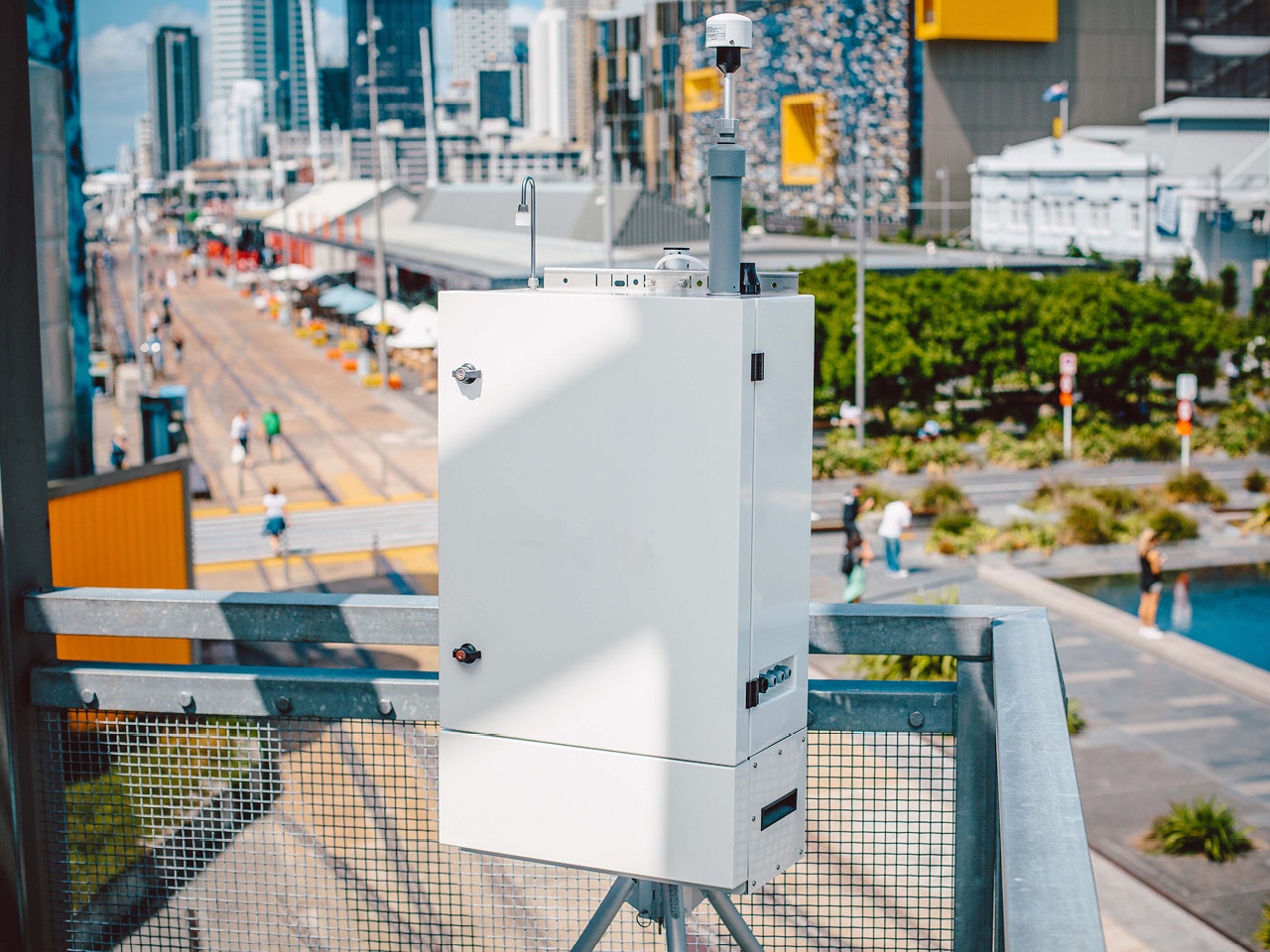
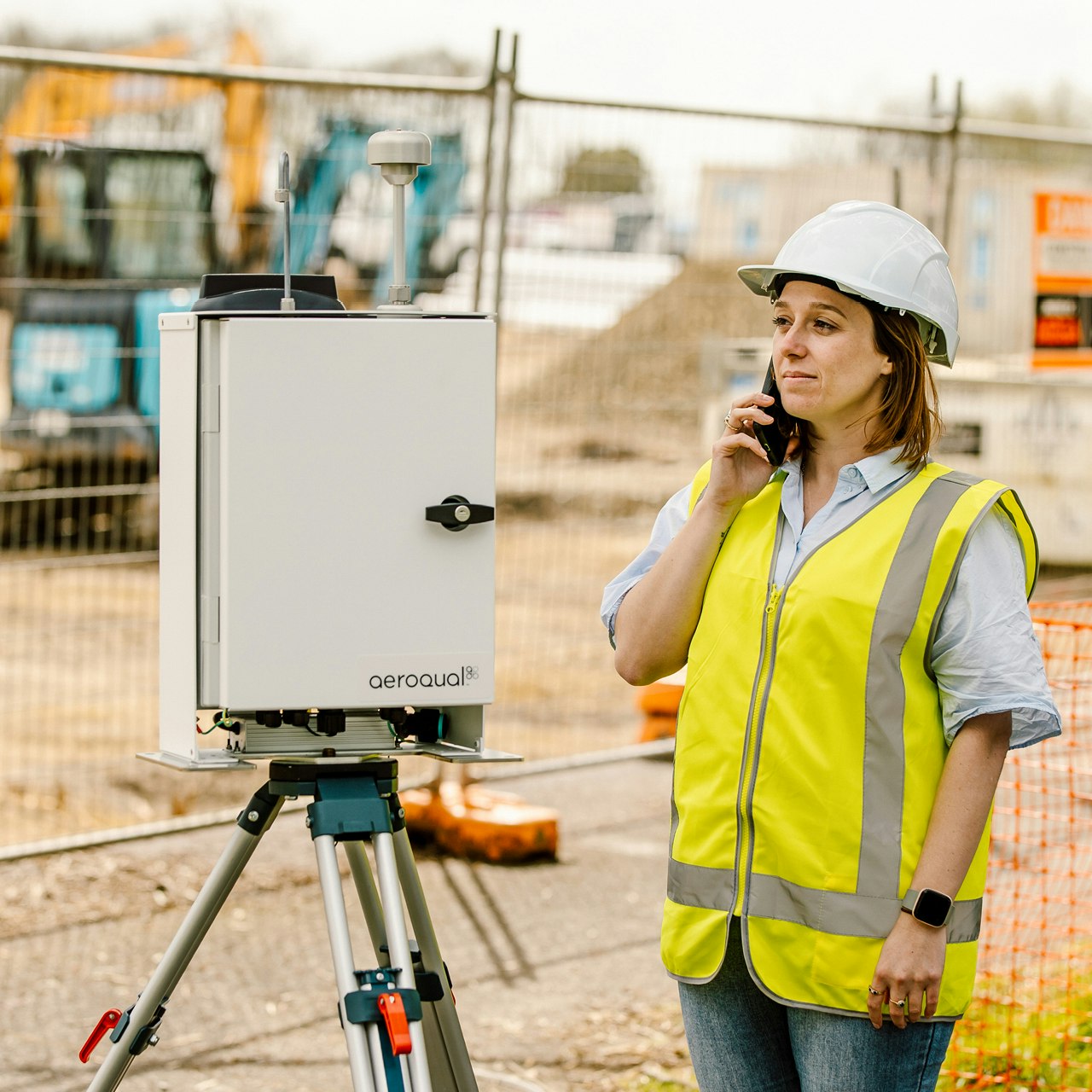
AQS 1 Air Monitor with Winterization Kit
The AQS 1 Air Quality Monitor with Winterization Kit is fast to deploy. It provides simultaneous measurement of multiple particle fractions (TSP, PM10, PM4, PM2.5 and PM1) and volatile organic compounds (VOCs). Measures and reports data in 1-minute intervals with user selectable averaging, delivering highly accurate results with very strong correlation to US EPA reference analyzers.
Particulate matter:
TSP, PM10, PM4 PM2.5, PM1
Gases:
O3, NO2, CO, CO2, SO2, VOCs, H2S, CH4, BTEX and NOx
Meteorological:
Temperature, humidity, noise, barometric pressure, precipitation, solar radiation, wind speed and direction

Winterization Kit
Comprised of a custom silicone-impregnated fiberglass jacket and built-in heater module, the Winterization Kit wraps easily around the AQS 1 and Dust Sentry outdoor monitors, extending the lower operating range from -10°C to -40°C with jacket and heater module, or to -20°C with the jacket alone - with no additional power requirements.
Cold Start with Automatic Baseline Correction (ABC)
The Aeroqual PID module includes a cold-start software routine that automatically applies a repetitive start up voltage to condition the lamp, eliminating lamp start up issues in cold climates.
Aeroqual’s ABC technology uses proprietary selective filters and response algorithms to provide baseline stability and lower detection limits for ambient gas measurement, reducing sensor drift caused by variable temperatures.


Specifications
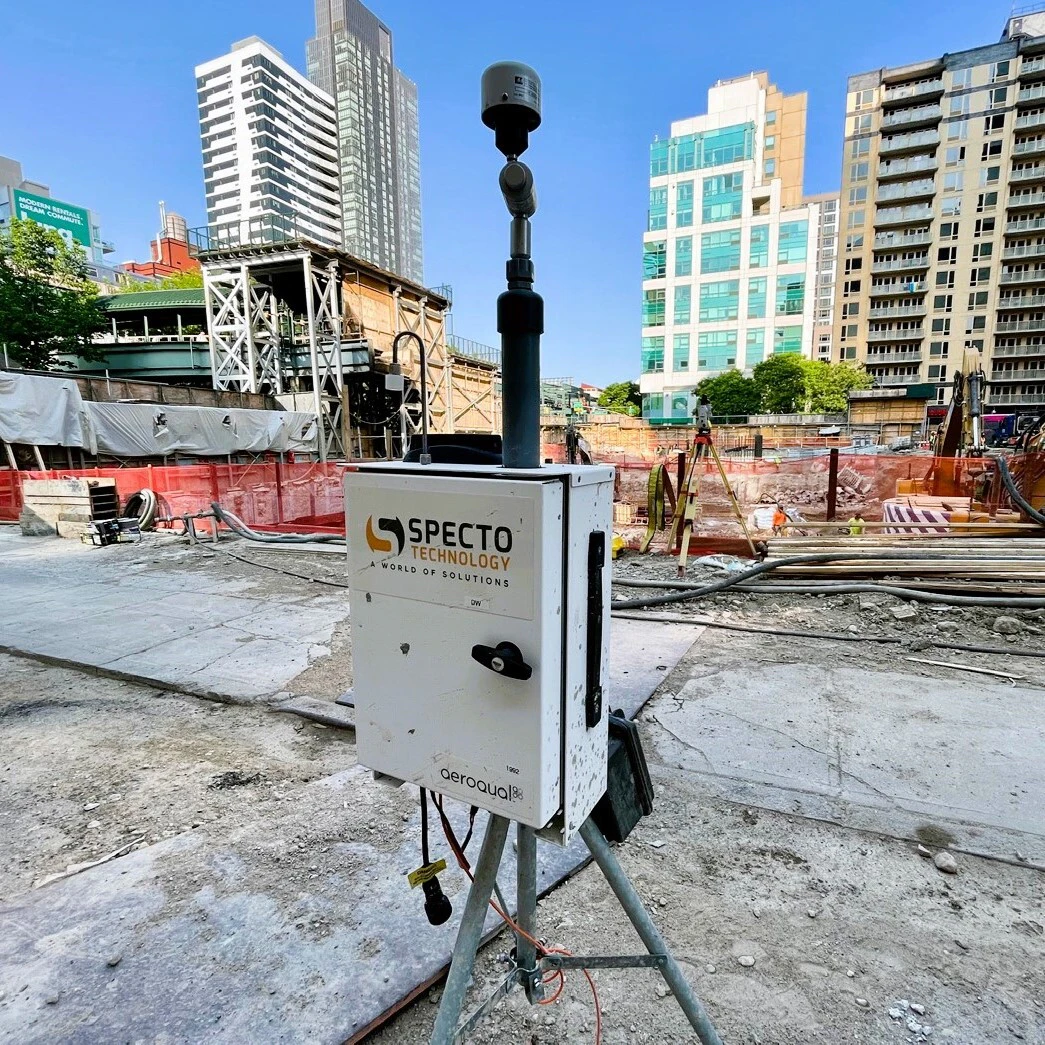
Case Study - Brownfield Redevelopment
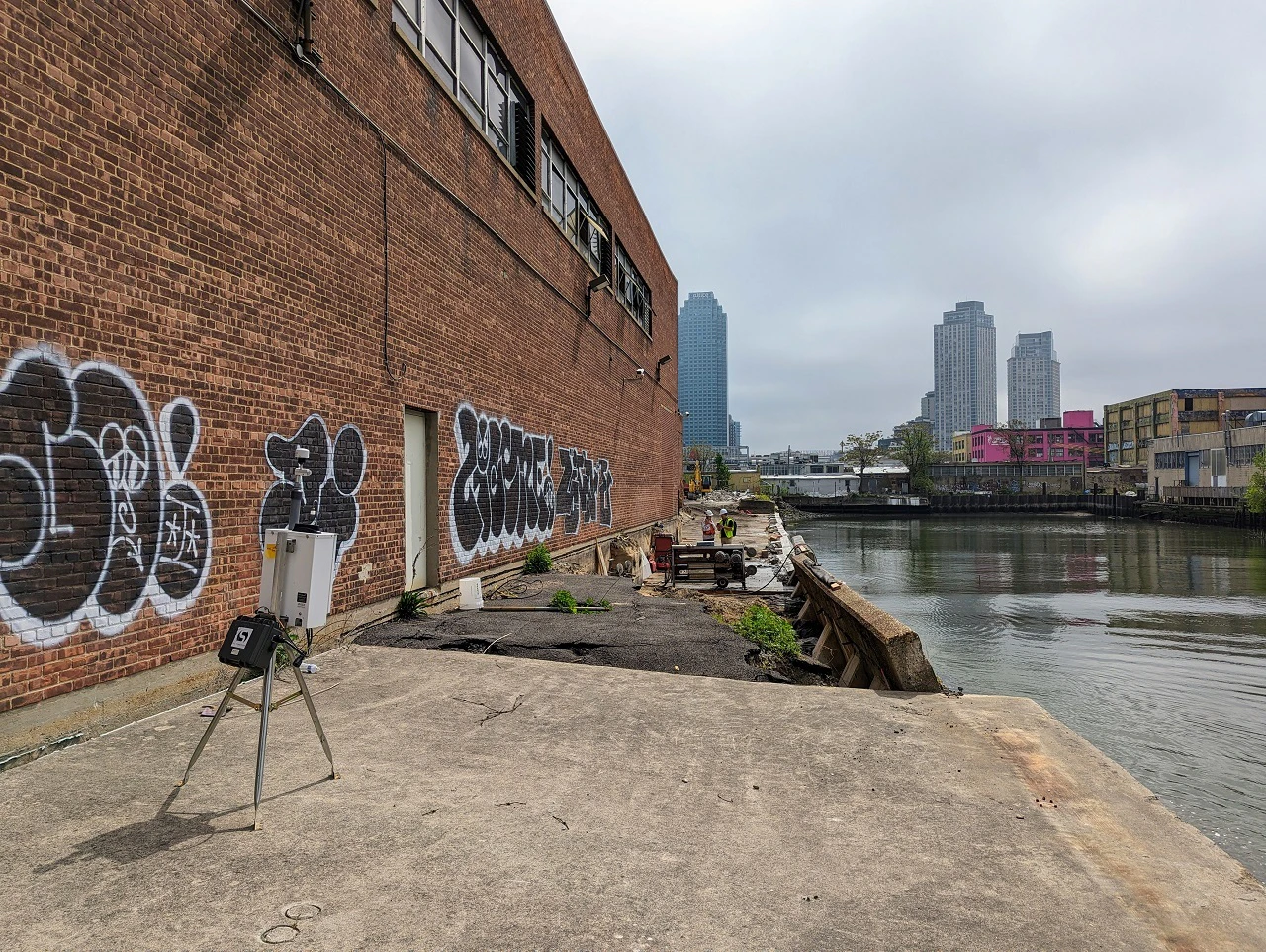
Perimeter monitoring during a waterfront stabilization project in Queens

Case Study - Brownfield Redevelopment
Building a healthier Brooklyn: Aeroqual and Langan's collaboration on the Alafia Estate

Blog - Outdoor
Aeroqual Winterization Kit Maintains Reliable Performance in Extreme Temperatures During Canadian Ambient Air Monitoring Study
OUR CUSTOMERS
Air monitoring made easy
Take the time and hassle out of your next project with a real-time air quality monitoring solution.
FAQs
The AQS can measure particulate matter (PM) and up to three gases at the same time. You can choose from the following parameters:
- Particulate matter (TSP, PM10, PM2.5, PM1)
- Gases: ozone, nitrogen dioxide, VOCs
- Meteorological (temperature, humidity, rain, pressure, wind speed/direction, solar radiation)
- Noise
Yes, the system can be configured with a PCX Particle Module. The PCX Particle Module mass measures PM1, PM2.5, PM4, PM10, and TSP as standard.
Is it easy to install and maintain?
Installation
The AQS can be used almost anywhere – on roofs and lamp posts, by a busy street or an offshore oil rig, in cold and hot climates, on or off-grid. The unit weighs about 12kg so installation is easy; you can get set up or re-locate in under 10 minutes.
Maintenance
This is a low maintenance air quality station and the skills required for operation is relatively low.
How do we calibrate an AQS?
Gas Calibration
There are three types of calibration of the gas module:
- Factory calibration pre-shipment is standard on all our instruments.
- Field calibration. Typically, only advanced users will need to field calibrate their AQS. All other users can depend upon 12 monthly factory calibration of the gas module.
- Factory calibration post-shipment.
Particulate Calibration
All Aeroqual PM engines need to be returned to the Met One Instruments factory in the U.S for service and calibration at the following recommended intervals:
- AQS Particle Monitor: 24 Months
- AQS Particle Profiler: 12 Months
Aeroqual can arrange for this service. Contact support@aeroqual.com for further details
What is the dimension and weight of an AQS monitor?
483 H x 330 W x 187 D mm (19 H x 13 W x 7.4 D inches) includes solar shield armour and mounting brackets and it weighs <13 kg (28.6 lbs).
Is the AQS a temperature-controlled enclosure?
No. However, the enclosure is a lockable IP65 rated, glass-reinforced plastic (GRP) cabinet with integrated aluminium solar shield armour.
What is the environmental operating range?
The AQS is designed to operate in environments from -10 °C to +45 °C (14 °F to 113 °F), or down to -40 degree with the optional Winterization Kit accessory
Can it be solar or battery powered?
Yes. To read more, see this technical note on How to remote/solar power the Dust Monitor.
Can we integrate a third-party weather station in the AQS?
Yes, a power and data interface for designated third party sensors is included.
Here is a list of the environmental sensors that integrate with the AQS system:
- Gill WindSonic (ultrasonic wind sensor)
- Vaisala WXT536 (weather transmitter)
- Met One MSO (weather transmitter)
- Cirrus MK427 Class 1 (noise sensor)
- Novalynx Pyranometer (solar radiation)
What communication options are there for access to the instrument?
- Standard: WIFI
- Ethernet (LAN)
- Optional: Cellular IP HSPA 3G modem
Are all the gas module calibrated to NIST standards?
Yes. The AQS is delivered with a NIST-traceable factory calibration.